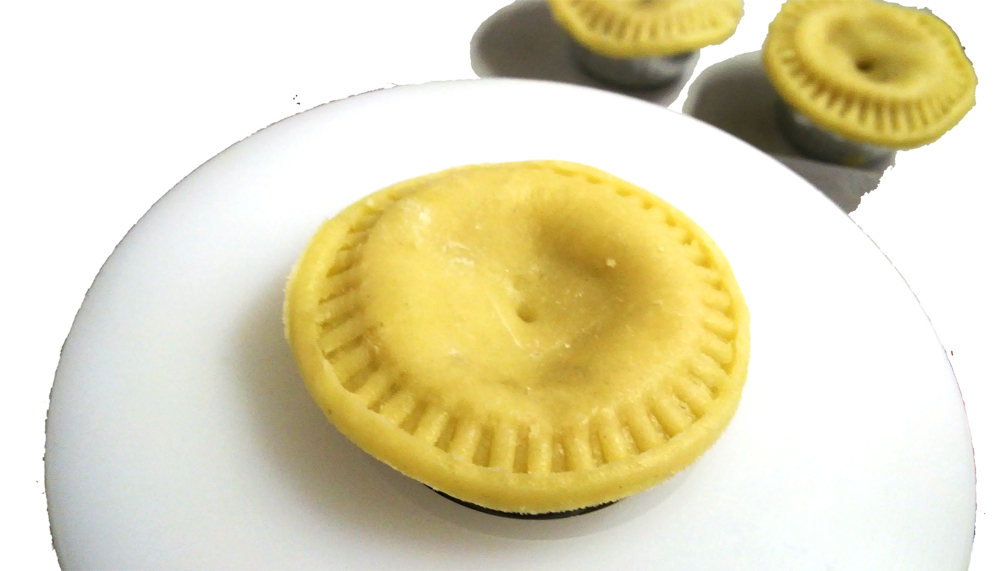
Pie production profits baked right in
Ever thought there has to be a better, simpler way of making pies?
There is, and we have those solutions.
Highly customisable pie making equipment that can be tailored to your specific requirements; Innovative in its small footprint, simplicity and high output. Empowering in lowering pie making operational costs, adds greater product versatility and product range without the costs or complexities plus considerably increases the bottom line.
We create and manufacture pie machines for a wide range of pie shapes and sizes, from party pies to family pies, tarts, quiche shells, pasties and empanadas.
Pie Designs & Solutions provides profit based pie production solutions for both low and high-volume pie and tart shell manufacture. Our systems can be tailored to produce from the smallest cocktail or party pie to large family pies in any shape, be it container type or fold over, Cornish and Empanada type pies.
Simplicity is not the goal. It is the by-product of a good idea and modest expectations. Paul Rand
Pie production gets simpler, cheaper and more profitable.
Gone are those historical time-consuming, intensive, spaces necessitated in between labour reliant pie making processes. Using the Pie Designs & Solutions system, you will produce value-packed, consistent pies that will never split open during baking or while being eaten.
The ability to simplify means to eliminate the unnecessary so that the necessary may speak.
Hans Hofmann
Simplicity is the key. Technology applied correctly is simple, and innovative solutions are about finding better ways of doing things. The simpler your process and operation the more profit will be in your pies.
- Eliminating production chaos through simplification
- Reduces your production footprint
- Reducing your costs
- Reducing your risk
- And converting all those big changes into profits
- Works with virtually all pastry types, including Gluten-free.
Our patented system gives quality bakers much added creative marketing freedoms; Increasing value markets and return on investment.
Producing custom pie dies to suit your specific marketing needs for branding and identification. Heave your steak pie shaped like the letter ‘S’ or a Cornish pie like ‘C’ is possible. Alternatively, your pie can be heart-shaped, flower shaped or almost any contour you choose.